Organs
An organ is a workshop with a job. The body is a village of workshops that share one blood supply and one night of sleep. You do not need a medical school chart to know the main streets. You need a respectful map of what usually happens, and a clear sense of when to stop reading and go get help.
Organs are made of tissues, and tissues of cells. Cells need fuel, oxygen, a stable salt-water bath, and a way to dump waste. Blood is the delivery road. The heart is the pump. The lungs load the blood with oxygen and unload carbon dioxide. The gut takes in food. The liver rearranges what arrives. The kidneys filter the blood and keep the water and salts in range. The skin is an organ too: a wrap, a cooler, a sensor, and a shield. When one workshop slows, the others feel it, which is why a person can seem “generally unwell” before anyone names a part.
Central nervous system
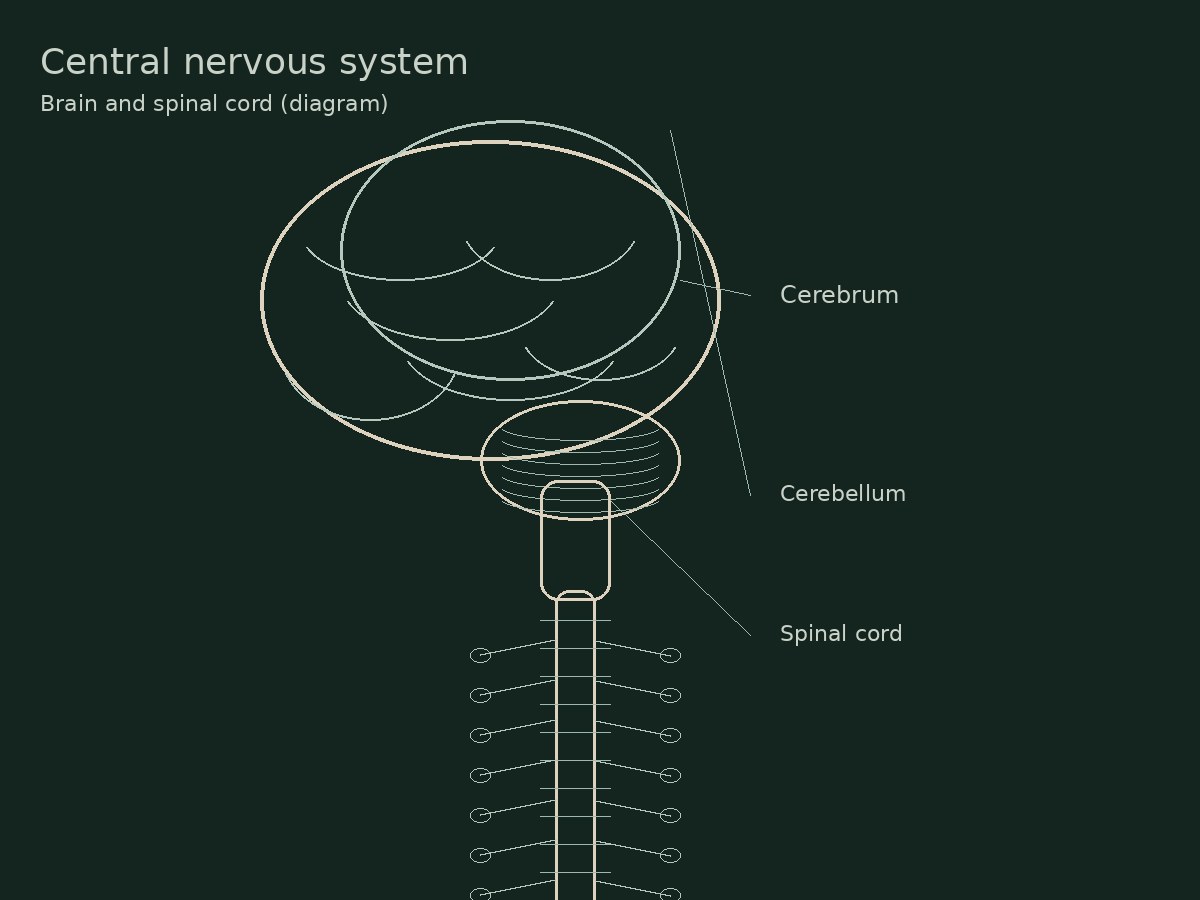
The brain and spinal cord are the main cable of the nervous system. Nerves carry signals out to muscles and organs, and bring sensation back in. You do not need a surgery photograph to understand the map: a simple diagram is enough. Sudden weakness on one side, trouble speaking, a severe new headache, or loss of consciousness are not topics for a website. They are reasons to use emergency services.
Heart and vessels
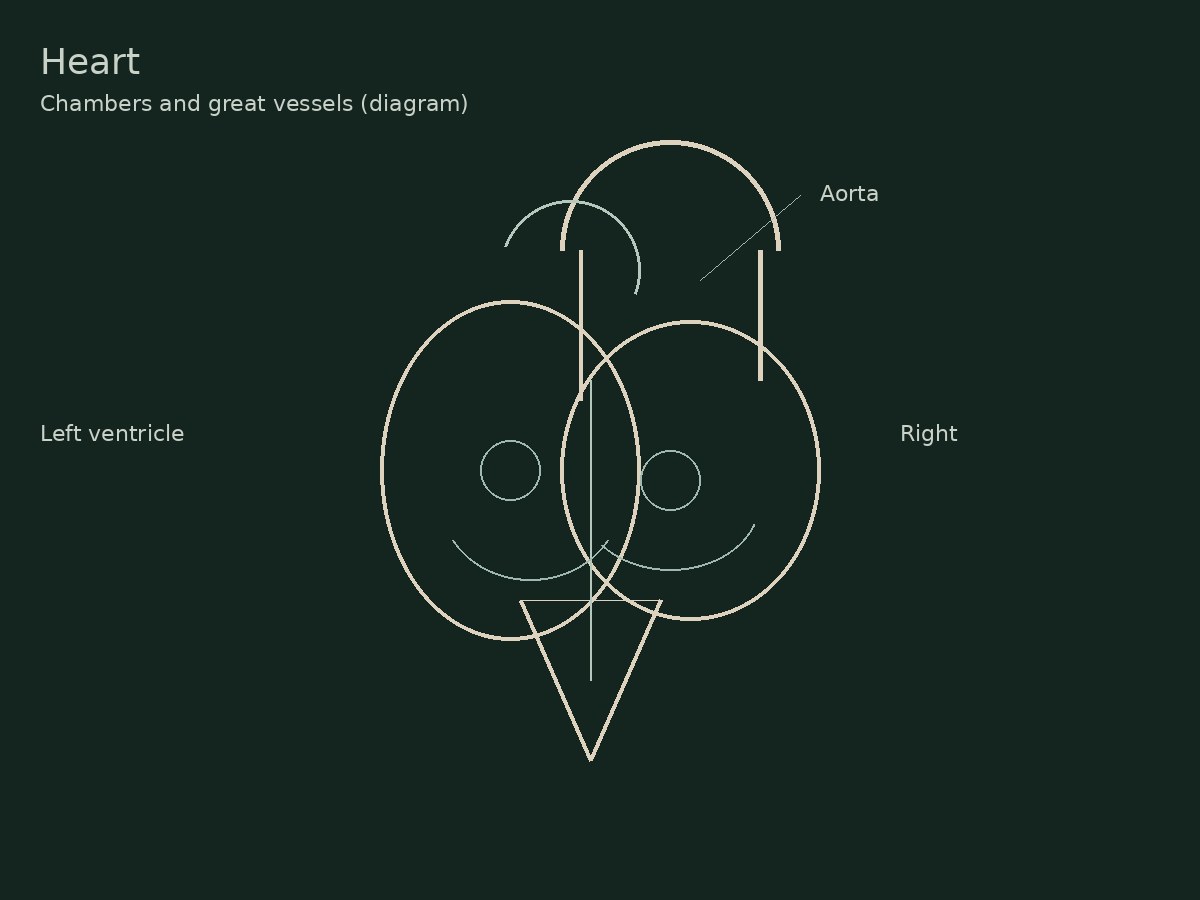
The heart is muscle. It squeezes in a rhythm set by its own electrical paths, with the nervous system allowed to speed or slow it. Each squeeze sends blood into arteries, which are thick-walled and under pressure. Veins return blood, thinner-walled, helped by the movement of legs and by valves that stop backflow. Capillaries are the thin places where oxygen and food actually step off into the tissues.
Blood pressure is the push in those arteries. It needs to be high enough to reach the brain when you stand, and not so high for so many years that the vessel walls suffer. A number from a machine is a clue, not a full story. Chest pain, pressure in the chest with effort, pain in the jaw or arm with sweat and nausea, sudden weakness, or a fainting spell are not clues to sit with. They are reasons to use emergency services. This page will not read your pulse for you.
Lungs
Air comes in through the nose and mouth, is warmed and dampened, and travels down branching tubes to tiny sacs. There, oxygen crosses into blood and carbon dioxide crosses out. The diaphragm, a dome of muscle under the ribs, does much of the pumping of air. You can feel it when you sigh. Smoking, dusty work, polluted air, and some infections burden this exchange. So does a belly that presses up when a person is lying flat. Breathlessness that is new, a lip that turns blue, or chest pain with breath are urgent. A cough that lingers is a reason to call a clinic, not to catalogue it here.
Gut, liver, and pancreas
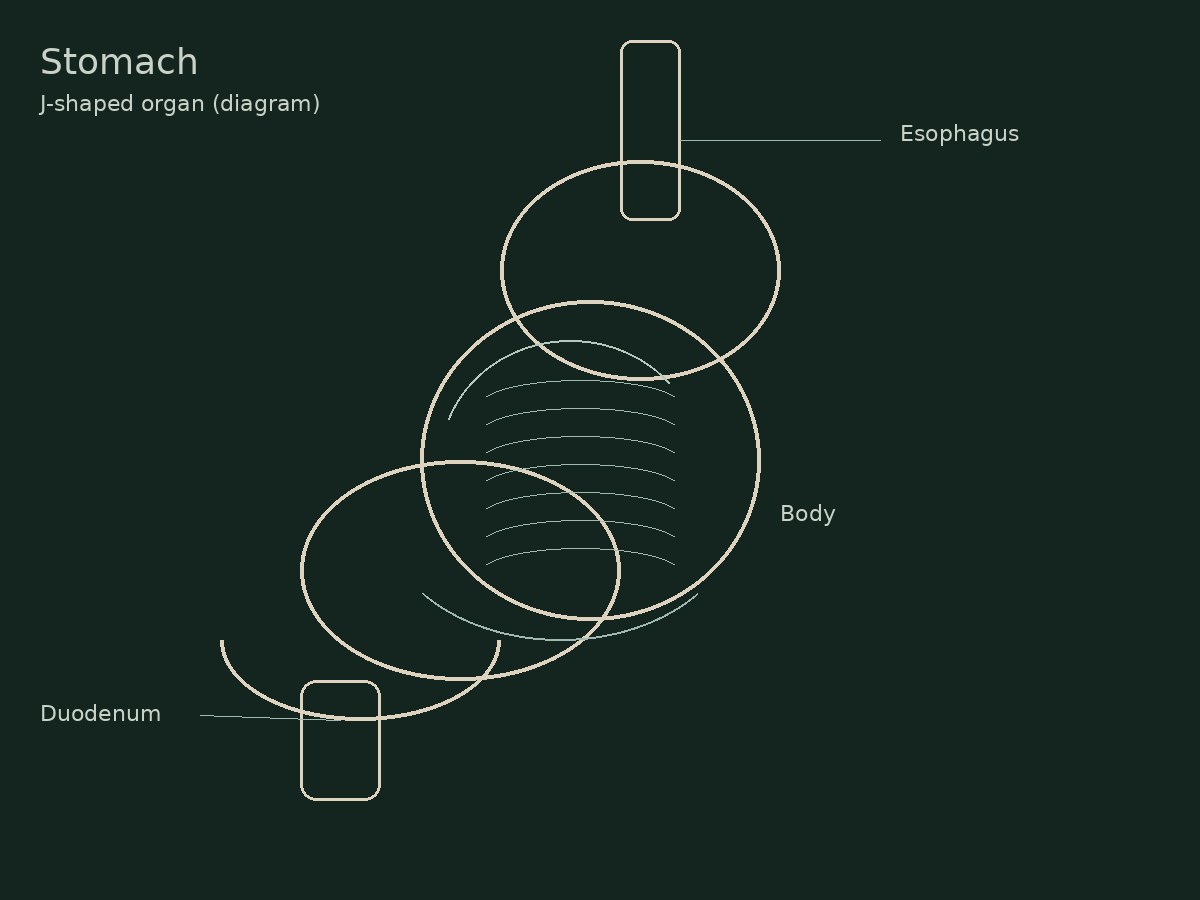
The gut is a long tube with jobs in sequence. The mouth starts the grinding and mixing. The stomach adds acid and churn. The small intestine is where most of the useful parts of food are taken into the body, with help from bile and from enzymes — compounds the body makes, described on the chemistry page. The large intestine reclaims water and holds a dense community of microbes that live on what we cannot digest. Those microbes are not a product to purchase. They are residents. Fibre, varied plants, and not drowning them in unnecessary antibiotics when a clinician has not asked for that are the ordinary courtesies.
The liver sits in the upper right belly and does many jobs that do not look like one job. It stores some fuel. It makes proteins for blood clotting. It handles leftovers of medicines and alcohol. It makes bile, which helps fat be absorbed. You cannot feel a healthy liver. You might notice yellow in the eyes, swelling of the belly, or unusual bruising if it is in serious trouble — and those signs belong in a clinic. The pancreas sits deeper. It sends digestive enzymes into the gut and sends insulin into the blood.
Kidneys and bladder
The kidneys sit in the back, under the ribs, one on each side. They filter blood all day. They keep what the body still needs and send the rest toward urine. They help steer blood pressure and help steer the production of red blood cells. They are quiet until they are not. Blood in the urine, pain in the flank with fever, no urine, or swelling of the legs with shortness of breath are not puzzles for a website. Drink is part of kidney life, but drowning yourself in water is not a virtue. Thirst and pale-ish urine are rough guides for a healthy person. Some heart and kidney conditions change those guides; that is why advice has to be personal.
Skin, bone, and the ones we forget
Skin keeps the sea inside us from leaking out. It makes vitamin D with sunlight. It tells us heat, cold, and the edge of a blade. A changing mole, a wound that will not close, or a burn are practical matters for a nurse or doctor. Bone is an organ as well as a scaffold; it stores minerals and makes blood cells in its marrow. The spleen filters blood. The thyroid in the neck sets a pace for many tissues. Glands and lymph nodes are part of the immune watch.
You do not need to memorize a chart. You need to know that these workshops share a village. Sleep, food, movement, smoke, drink, and infection reach more than one organ. When something is suddenly worse — crushing chest pain, trouble breathing, a face that droops, blood you cannot explain, a belly as hard as a board — you leave the map and you call for help. When something is slowly worse, you still leave the website. The map is for understanding the ordinary body, not for naming your own.